If you are looking at a beachfront condo in Cabo San Lucas, a golf villa in Palmilla, or a custom homesite along the Tourist Corridor, one question usually appears early: can a US citizen legally own property there? That is where mexico fideicomiso explained becomes more than a legal term. It becomes the key to buying with clarity and confidence.
For many US buyers, the word sounds more complicated than the structure actually is. A fideicomiso is a bank trust used for certain properties in Mexico’s restricted zone, which includes land near the coast and borders. Los Cabos falls within that coastal zone, so this is the framework many foreign buyers use when purchasing residential real estate.
The short version is simple. You can acquire beneficial rights to the property through a Mexican bank acting as trustee, while you remain the beneficiary with the right to use, improve, rent, sell, or pass the property to your heirs. It is a well-established, legal, and widely used structure for foreign ownership in high-value markets like Cabo.
Mexico fideicomiso explained for Cabo buyers
The restricted zone covers property located within approximately 31 miles of the coast and 62 miles of international borders. Since much of the most desirable inventory in Los Cabos is coastal or near-coastal, foreign buyers often purchase through a fideicomiso rather than taking direct title in their personal name.
This does not mean the bank controls your lifestyle decisions or has day-to-day authority over your home. The bank serves as trustee, but the buyer is the beneficiary and retains the practical rights that matter. You decide whether to occupy the property seasonally, hold it as a second home, renovate it, lease it, or sell it.
That distinction matters because many first-time buyers hear the word trust and assume they are giving up control. In practice, the fideicomiso is designed to satisfy Mexican constitutional rules for foreign ownership in the restricted zone while still allowing foreign buyers to enjoy the property much as they would elsewhere.
How the fideicomiso actually works
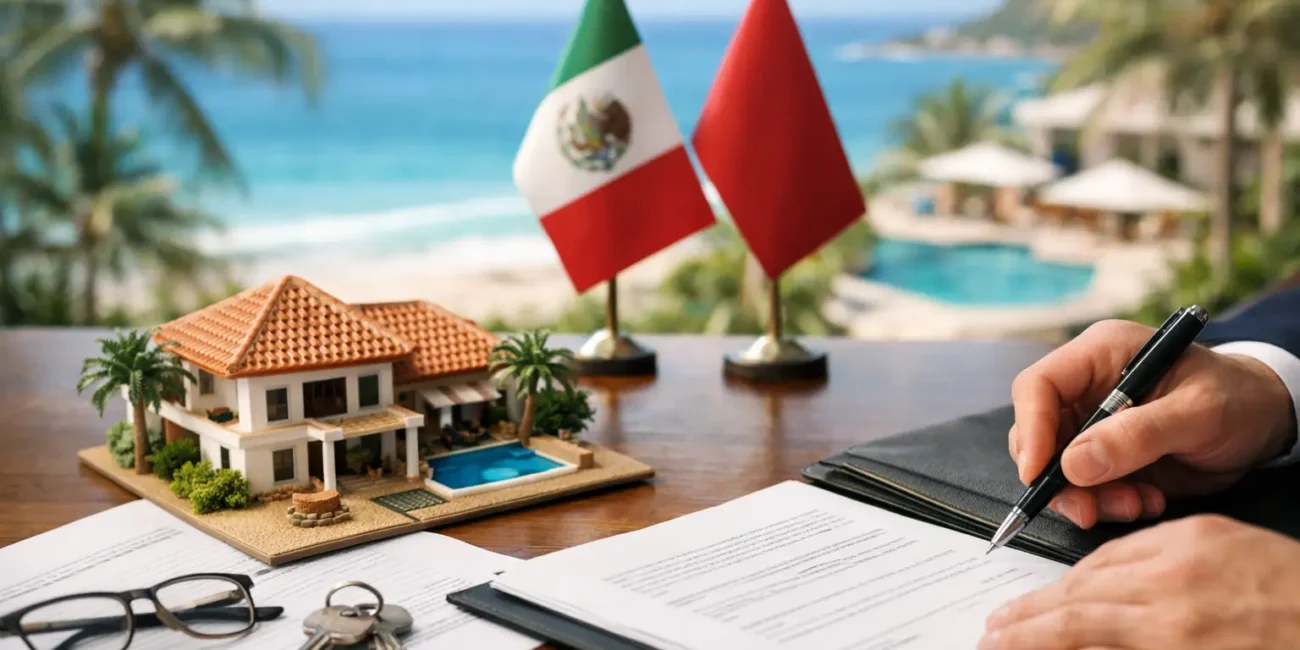
A fideicomiso involves three parties. The seller transfers the property into a trust. A Mexican bank serves as trustee. The foreign buyer is named as the beneficiary. As beneficiary, you hold the rights to use and benefit from the property.
Those rights are broad. You can live in the home, remodel it subject to local permits and community rules, name substitute beneficiaries, and direct a future sale. If you decide to exit the property later, the trust can transfer to a new buyer or the property can be sold out of the trust depending on the transaction structure.
The trust is typically established for a 50-year term and can be renewed. For most buyers, that timeline is more than adequate, especially when paired with estate planning through named beneficiaries. The practical takeaway is that this is not a temporary workaround. It is the standard ownership vehicle for many foreign buyers purchasing residential property in coastal Baja markets.
What rights do you have as the beneficiary?
This is where mexico fideicomiso explained should feel reassuring rather than abstract. As beneficiary, you are not simply occupying a property owned by someone else. You hold the enforceable rights to the property through the trust structure.
You can usually do the following: occupy the property personally, lease it for vacation or long-term use if permitted, make improvements, sell your interest, and designate heirs or replacement beneficiaries. If the property is inside a luxury gated community, your use will also be subject to HOA rules and local regulations, but that is true regardless of whether the purchase is in trust.
The more useful question is not whether you have rights, but whether there are any limits you should understand before closing. The answer is yes, and those limits are usually practical rather than alarming. Rental activity may require tax compliance and in some cases operational setup. Renovations may need municipal approvals and architectural review. Certain communities have restrictions on short-term rentals. None of that is unique to the fideicomiso, but buyers should understand how ownership structure and property use intersect.
Costs, fees, and timing
A fideicomiso is not free, and luxury buyers should expect it to be one line item within a broader closing budget. There is typically an initial setup fee paid to the bank, along with an annual trustee fee. Closing costs may also include acquisition tax, notary fees, registration charges, permits, and due diligence expenses.
Exact costs vary by bank, transaction value, and deal complexity. A resale condo in San Jose del Cabo may look different from a custom oceanfront estate purchase in Querencia or Pedregal. Timing can vary as well. The trust creation process is coordinated alongside the title review, permit process, purchase agreement compliance, and closing schedule.
This is why experienced local guidance matters. Buyers often focus on listing price and property features, but the closing framework is where confidence is built. In premium Cabo transactions, the right team helps you understand not just what you are buying, but how it is being acquired and documented.
Is a fideicomiso safe?
In the right transaction, yes. The structure itself is legal, standard, and used throughout Mexico’s coastal resort markets. The larger issue is not whether fideicomisos are safe in theory, but whether the specific property has been properly vetted.
That means reviewing title history, confirming the seller’s authority to transfer, checking for liens or encumbrances, verifying permits where relevant, and ensuring trust documents and closing instructions align with the deal terms. In other words, the trust is only one part of a secure purchase.
Buyers should also understand the role of the notary public in Mexico. Unlike a US notary, a Mexican notario is a highly trained legal professional with formal responsibility in real estate transfers. That adds an important layer of legal formality to the process, but it does not replace buyer-side representation and independent review.
Fideicomiso vs. a Mexican corporation
Some foreign buyers hear that a corporation can also hold property in Mexico and wonder which route makes more sense. It depends on the intended use.
For a personal residence, vacation home, or second home in Los Cabos, a fideicomiso is often the cleanest and most common option. If the property is being acquired primarily for business activity, especially larger-scale rental operations or commercial use, a Mexican corporation may sometimes be considered. That path comes with different compliance obligations, accounting requirements, and operational considerations.
For many luxury residential buyers, the corporation question is less about opportunity and more about avoiding unnecessary complexity. The best structure depends on how you plan to hold and use the property, not on what sounds more sophisticated.
Common misunderstandings US buyers should avoid
The first misconception is that foreigners cannot own property in Cabo. They can. The relevant issue is the legal structure used in the restricted zone.
The second is that the bank can take the property back at will. That is not how the fideicomiso functions. The bank acts as trustee under the trust agreement. It does not operate as a discretionary owner making lifestyle or resale decisions for you.
The third is that all trusts are interchangeable. They are not. Banks have different fees and administrative processes, and the quality of transaction coordination matters. A smooth closing depends on experienced agents, legal professionals, escrow coordination where applicable, and a clear understanding of deadlines and documentation.
The fourth is that every property should be approached the same way. Cabo is a diverse market. A turnkey condo in a branded community, a custom lot in a private enclave, and an investment villa with rental history each raise different questions. Ownership structure may be standard, but due diligence never is.
Why this matters in the Cabo luxury market
In high-value coastal markets, buyers are not just purchasing square footage. They are buying access to a lifestyle defined by privacy, views, marina proximity, golf, wellness, and year-round use. The legal structure should support that experience, not create confusion around it.
That is why the best real estate guidance in Cabo goes beyond showing properties. It helps buyers understand neighborhood fit, property quality, resale considerations, and transaction mechanics in one coordinated process. At Be in Cabo, that level of guidance is part of what makes cross-border buying feel more straightforward for discerning clients.
A fideicomiso is not a red flag, and it is not a loophole. It is the established path many foreign buyers use to purchase exceptional property in Los Cabos. Once you understand what it does, who controls what, and where the real due diligence belongs, the term loses its mystery.
The right Cabo purchase should feel exciting for the right reasons – the location, the design, the lifestyle ahead. The ownership structure should simply do its job quietly in the background while you focus on choosing the property that fits the life you want here.