Water Supply in Los Cabos Homes: A Buyer’s Viewing Checklist
A beautiful shower and an inviting kitchen tell you something about a home’s design. They tell you much less about how water reaches those rooms, where it is stored or who maintains the equipment behind the scenes. When viewing a Los Cabos home, a few practical questions can make the difference between admiring the finishes and understanding everyday ownership.
This water-supply checklist is a starting point for conversations with the seller, building administrator and a qualified inspector. It is not a test of drinking-water safety or a diagnosis of a particular property. The goal is to leave the showing knowing what has been explained, what is documented and what still needs a closer look.
Ask the owner or administrator to describe how water reaches this exact home. Is there an individual utility connection, a shared development system, delivered water or a combination? Where does incoming water go before reaching the fixtures? A simple explanation should identify any cistern, rooftop tank, pump and treatment equipment, along with the person responsible for each.
Storage is a real part of local water planning: a March 2026 Los Cabos municipal announcement described a household tank program in areas with limited supply. That historical announcement does not establish today’s service at a home you are viewing. Request current, property-specific information rather than applying a neighborhood story or old delivery schedule to every address.
If a listing mentions a cistern or tinaco, ask for its documented capacity and whether it serves only this residence. In a condominium, a large shared tank is not the same thing as a private reserve of that size. Clarify which buildings, common areas and other uses draw from it.
Ask how the level is monitored, who responds when it is low and how replenishment is arranged. A capacity figure alone cannot establish how long water will last: occupancy and actual use matter. Avoid turning liters into a promised number of days without a property-specific assessment.
Have authorized staff identify equipment and access points from a safe, accessible position. Do not climb onto roofs, lift heavy covers, enter tanks or operate unfamiliar electrical controls. Those are not necessary steps in a buyer’s first walk-through. Record questions for a qualified professional instead.
With permission, ask the showing agent to demonstrate a kitchen faucet and a bathroom fixture briefly. Notice whether operation seems steady, whether there are visible drips and whether the hot-water wait suits your expectations. Record the location and circumstances of a concern rather than labeling its cause.
A strong stream during one showing is only an observation at that moment. It does not establish reliable service at every hour, adequate performance with several fixtures running or the condition of a concealed pump. Ask an inspector or plumber to evaluate pressure and equipment against the actual installation and manufacturer requirements.
The EPA’s WaterSense home-maintenance guidance treats leak checks, service pressure and fixture maintenance as separate topics. That distinction is useful here, although its guidance is not a Los Cabos building-code certification. A pleasing shower should not replace an inspection.
Ask for the most recent tank-cleaning record, pump service invoice and equipment manuals. If filters or treatment devices are present, identify their model, purpose, service requirements and last maintenance date. A device’s appearance does not establish what it removes or whether it is functioning as intended.
Mexico’s Secretaría de Salud publishes guidance on cistern cleaning and disinfection, underscoring that stored water involves ongoing care. For a purchase, the useful next step is to request service records and professional advice appropriate to the actual system, rather than attempt a treatment procedure during a showing.
Do not infer drinking-water safety from clarity, taste, pressure or the presence of a filter. If that question affects your decision, request appropriate current testing and interpretation from qualified professionals.
In a condo or managed community, ask who owns and maintains the pumps, tanks and lines serving the residence. Does the association cover routine servicing? How are replacement costs handled? Who can authorize repairs, and whom would you contact after hours?
Request recent bills or statements and clarify what they include. Utility charges, deliveries, equipment servicing and association costs may appear in different records. Ask whether billing is individually metered, allocated or included in another charge; do not assume that an HOA payment covers every water-related expense.
If you will visit seasonally, identify who checks for leaks and equipment problems between stays. Ask about the existing management arrangement and its written scope. For the rest of your viewing, pair these questions with our guide to windows and sliding doors so everyday operation receives attention alongside the view.
No. Storage capacity alone does not establish replenishment, usable reserves or equipment performance. Ask how the complete system is managed and have its condition assessed.
It can reveal an observation worth discussing, but it cannot establish performance under every condition. Request a professional evaluation if pressure or reliability is important to your decision.
Start with supply and billing information, storage capacity and ownership, service records, equipment manuals and the administrator’s written responsibilities. Give the inspector your unanswered questions.
Thinking about how you will be in cabo includes the ordinary moments: morning showers, laundry and returning after time away. Clear records and a well-planned inspection help you understand the home behind its photographs.
To organize a thoughtful property tour, contact Be In Cabo. Reach Troy Daniels at [email protected] or +1 (916) 996-5429 to discuss your plans and the questions to bring to your next viewing.
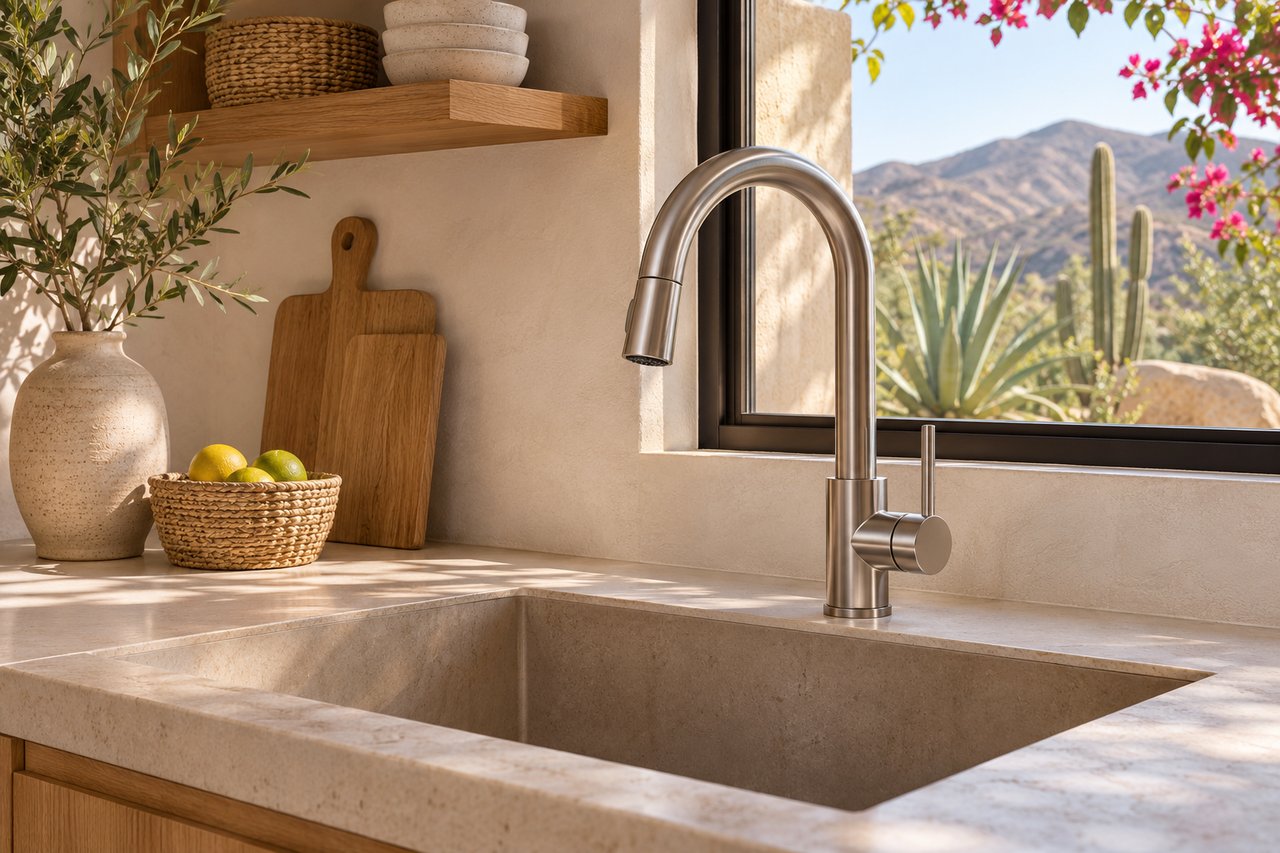
Cover image: AI-generated editorial illustration of a Baja-style kitchen; not an actual property or verified water-system installation.

A flexible daytime approach to the historic center, with room to explore and notice everyday life.

How to assess everyday sound, compare rooms and ask better questions before choosing a home.

A practical viewing guide to vehicle fit, everyday access, guest arrangements and shared responsibilities.
Questions about storage, pressure, maintenance and shared responsibilities to bring to your next showing.

Look beyond the view to operation, glazing, coastal care and the documents worth requesting.

Choose the right boat, ask better questions and leave time to enjoy Land’s End.

A relaxed plan for galleries, a memorable lunch and time beside the Pacific.

A practical room-by-room look at daylight, lamps and the controls that shape an evening at home.
A practical showing checklist for luggage, linens, beach gear and a laundry setup that fits your routine.
Whether you're searching for a vacation home, an income-producing investment, or your forever home in Los Cabos, we'll guide you with local expertise, honest advice, and personalized service. Experience the difference of working with professionals who put your goals first.
Get In Touch With Our Team

Be In Cabo Real Estate Group
ADDRESS Jacarandas Fracc III Ste 2615 Plaza Cardones L17 Lomas del Pacifico Cabo San Lucas, Estado de Baja California Sur 23473